
Introduction
The burden of diabetes and its complications has been increasing tremendously worldwide. Of
all the complications, diabetic foot is considered to be a debilitating complication as it affects
the patients both financially and socially thereby affecting his quality of life [1, 2]. It is estimated
that around 2% of all diabetic patients will develop an ulcer annually and around 15% of them
carry risk of diabetic foot ulcer during their lifetime [3]. It is also well known that there is
difference in diabetic foot problems in Asian and Caucasian population [4, 5].
Diabetic foot is often neglected in developing and underdeveloped countries [5]. In spite of
knowing the differences, it is observed that most concepts on diabetic foot are taken from the
west and are followed in the eastern region blindly without analyzing much on the differences in
diabetic foot problems in these regions.
In past few years, we have seen a tremendous development in various new concepts in diabetic foot. The biggest development is the Amit Jain’s Principle and Practice of diabetic foot, the new modern diabetic foot surgery proposed by Amit Jain, a pioneering diabetic foot surgeon from Indian subcontinent [5, 6, 7]. The new system of practice of diabetic foot by Amit Jain, who is considered to be a Father of this new modern Diabetic foot surgery, consist of various new concepts that has changed the perception of how diabetic foot should be understood and managed.
This article aims to discuss the Amit Jain’s classification for diabetic foot, the new universal classification that is today the classification supreme in diabetic foot [2, 5, 8].
In past few years, we have seen a tremendous development in various new concepts in diabetic foot. The biggest development is the Amit Jain’s Principle and Practice of diabetic foot, the new modern diabetic foot surgery proposed by Amit Jain, a pioneering diabetic foot surgeon from Indian subcontinent [5, 6, 7]. The new system of practice of diabetic foot by Amit Jain, who is considered to be a Father of this new modern Diabetic foot surgery, consist of various new concepts that has changed the perception of how diabetic foot should be understood and managed.
This article aims to discuss the Amit Jain’s classification for diabetic foot, the new universal classification that is today the classification supreme in diabetic foot [2, 5, 8].
Amit Jain’s classification for diabetic foot
For decades and even now in many regions, diabetic foot is often studied by Wagner’s
classification [8, 9]. Another common classification is University of Texas classification [8, 9],
which many consider as a modified Wagner’s classification [10]. Both these classification are for
diabetic foot ulcer and it has been seen that most often they are confused and mistook to be
classification for diabetic foot on whole by many [11].
n the year 2012, Amit Jain, a pioneering diabetic foot surgeon from Indian subcontinent, proposed the first new classification on diabetic foot complication that encompassed most lesions seen in diabetic foot around the world, which the previous popular and validated classifications in the west did not do it [8, 9, 12].
This simple classification divides the diabetic foot complications on whole into 3 types namely [Table 1], Type 1, Type 2 and type 3 diabetic foot complications [6, 8]. Type 1 diabetic foot complications are infective complications seen in foot and include abscess [Figure 1], Cellulitis, wet gangrene, tinea pedis, necrotizing fasciitis [Figure 2], etc.
n the year 2012, Amit Jain, a pioneering diabetic foot surgeon from Indian subcontinent, proposed the first new classification on diabetic foot complication that encompassed most lesions seen in diabetic foot around the world, which the previous popular and validated classifications in the west did not do it [8, 9, 12].
This simple classification divides the diabetic foot complications on whole into 3 types namely [Table 1], Type 1, Type 2 and type 3 diabetic foot complications [6, 8]. Type 1 diabetic foot complications are infective complications seen in foot and include abscess [Figure 1], Cellulitis, wet gangrene, tinea pedis, necrotizing fasciitis [Figure 2], etc.
Type 2 diabetic foot complications include all non-infective
complications like trophic ulcers, claw toe, charcot foot, dry
gangrene, hammer toe, ischemic ulcer, etc
Type 3 diabetic foot complications are mixed in nature wherein
the type 2 diabetic foot complications get infected. Best example
in this category is a trophic ulcer with osteomyelitis.
Amit Jain’s classification for diabetic foot complication is an
open, modern, comprehensive classification for diabetic foot
which can also include new lesions that can occur in future in
diabetic foot [12, 13]. This 3 tier simple, easy, practical
classification, that includes most lesions in diabetic foot around
the world, should now considered to be a universal classification
in view of it being classification supreme [12, 14].
It is now well known that there is a difference between a
classification that is descriptive in nature and a scoring which is
numerical in nature and that gives a better idea of
severity/outcome, like healing or amputation [15]. It is often
noticed that many researchers/ reviewers/ consensus/
committees have mixed these 2 entities frequently in search of
an ideal classification on diabetic foot.
An important property of diabetic foot is the triad namely,
neuropathy, ischemia and infection [16]. Amit Jain’s
classification addresses them uniquely and efficiently. The
infections like abscess, necrotizing fasciitis, etc are included.
The neuropathic complication like trophic ulcer, charcot foot,
hammer toe, etc are also addressed and the ischemic
complications like dry gangrene and ischemic ulcers are also
included in this classification.
Various studies done on this classification shows that type 1
diabetic foot complications are the most common cause of
hospitalization in tertiary care hospital [2, 3, 13, 17] ranging from
60% -91% in different series. In Singh et al series [13], wet
gangrene was the most common pathological lesion accounting
for 33.98% of cases. In a recent series of the author and team
also [2], it was seen that type 1 diabetic foot complications was
the most common cause of hospitalization and wet gangrene was
the common pathological lesion seen and it was found to be
statistically significant [P, 0. 001].
One should understand that there is a geographic variation in
occurrence of the lesions in the foot. Further, it is also well
known that the physician’s see early lesion compared to the
surgeon’s. So it is obvious that physician is likely to see type 1
diabetic foot complication like tinea pedis and cellulitis and type
2 complications like trophic ulcer, toe deformities etc more
frequently and they will be managing them on their own. A
surgeon often gets to deal with operative complications like
abscess, wet gangrene, necrotizing fasciitis etc and they often
need hospitalization.
Studies from India also have shown that the major amputation
most commonly is seen in type 1 diabetic foot complications [18,
19]. In Kalaivani et al series [19], 85.7% of all major amputation
has type 1 diabetic foot complication. Even in recent series of
Jain et al [2], it was seen that most major amputation were
performed in patients with type 1 diabetic foot complications. It
was also seen that most stump complication following major
amputation [78.6%] occurred in patients with type 1 diabetic
foot complication [7]. It was also seen that majority of mortality
[78.38%] occurring in diabetic foot were seen in patients with
type 1 diabetic foot complication [20]. Even in a salvage series by
Jain et al [21], it was seen that 76% of patients who underwent
transmetatarsal amputation, had type 1 diabetic foot
complication.
Amit Jain’s classification revolutionized the approach towards
Diabetic foot and made one look beyond ulcers which was the
focus of almost all previous classifications like Wagner’s,
University of Texas, PEDIS, etc [5, 8, 9]. Most Researchers and
consensus committee’s often focused and discussed merits and
demerits of diabetic foot classification without even observing
the fact that most of them were either focal classification or
incomplete classification [12]. It is also seen that many
researchers are biased with their choice of classification rather
than looking at what is needed for the community. For example,
Nather et al. [22] opines on adopting Wagner’s and king’s
classification and provides treatment guidelines. In reality,
King’s classification is not followed inmost zones. Further, it is
now an incomplete classification and also it does not have
sequential progressive staging. Nather et al [22] expects a
classification to give follow-up action which no descriptive
diabetic foot classification can give and further it is an
undesirable property of any classification system. Often many
such unrealistic expectations from classification leads to
confusion on understanding which is the best classification
system and like these different expectations from different
researchers/ reviewer’s/ consensus group’s, it was observed that
for decades no universal classification for diabetic foot was
developed.
Today, there is good understanding of type of classifications for diabetic foot classification and also the difference between universal classification and ideal classification for diabetic foot [12]. Often these 2 were mixed up. With significantly important advantages, Amit Jain’s simple classification for diabetic foot classification is the only classification that can be considered as a universal classification. The broader the classification with many lesions that has varied spectrum of involvement and with varied severity, it is virtually impossible for a single classification to give treatment guidelines for each such lesion.
Today, there is good understanding of type of classifications for diabetic foot classification and also the difference between universal classification and ideal classification for diabetic foot [12]. Often these 2 were mixed up. With significantly important advantages, Amit Jain’s simple classification for diabetic foot classification is the only classification that can be considered as a universal classification. The broader the classification with many lesions that has varied spectrum of involvement and with varied severity, it is virtually impossible for a single classification to give treatment guidelines for each such lesion.
Law of classification [5]
Amit Jain’s law of classification states that “Diabetic foot, a
complex disease, is multi-factorial, multi-pathological, multi
anatomical with multi-level involvement and multi-systemic
complications requiring multi-disciplinary involvement. Hence,
it is impossible for a single classification for diabetic foot to
predict the outcome in each and every patient and to guide
specific treatment for each patient using a single classification
that encompasses many lesions in diabetic foot”.
The Amit Jain’s law for classification shall henceforth stop researchers/ reviewers/ consensus group from looking for a perfect or an ideal classification for diabetic foot on whole that addresses every issue raised and that can fulfill their unrealistic expectation from each classification. Rather combination of classification should henceforth be encouraged in future [5].
The Amit Jain’s law for classification shall henceforth stop researchers/ reviewers/ consensus group from looking for a perfect or an ideal classification for diabetic foot on whole that addresses every issue raised and that can fulfill their unrealistic expectation from each classification. Rather combination of classification should henceforth be encouraged in future [5].
Conclusion
Amit Jain’s classification is the simplest classification laid till
date on diabetic foot. It is a 3 tier modern classification which is
easy, practical, original and a complete classification that
includes the common lesions seen in diabetic foot around the
world. This descriptive classification can undoubtedly and
undeniably be the universal classification for diabetic foot which
also serves as an excellent teaching tool to disseminate the
knowledge of diabetic foot across the globe. After decades, a
universal classification supreme has been proposed and it’s high
time that it’s followed worldwide by all consensus groups and
societies unbiasly owing all its merits and demerits keeping the
Amit Jain’s law of classification in the mind.
| Sl No | Types of Diabetic Foot Complication | Lesions |
|---|---|---|
| 1] | type 1 diabetic foot complication | wet Gangrene, Cellulitis, abscess, necrotizing fasciitis, Etc |
| 2] | type 2 diabetic foot complication | trophic ulcer, hammer Toe, claw toes, ischemic ULcER, charcot foot, dry gangrene, Etc |
| 3] | Type 3 diabetic foot complication | EX – non healing ulcer with osteomyelitis |

Fig 1: showing abscess over left foot. This is Amit Jain’s type 1
diabetic foot complication
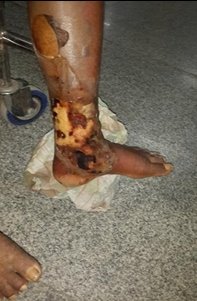
Fig 2: showing necrotizing fasciitis. This is also Amit Jain’s type 1
diabetic foot complication
References
1. Doupis J, Veves A. Classification, Diagnosis and Treatment
of daiebtic foot foot ulcers. Wounds. 2008; 20(6).
2. Jain AKC, Rajagopalan Gopal S. Testing and validating Amit Jain’s classification and scoring system for daiebtic foot complications. IJMSIR. 2008; 3(1):227-236.
3. Kalaivani V. Evaluation of diabetic foot complication according to 2014;8(12):7-9. Amit Jain’s classification. JCDR.
4. Terashi H, Kitano I, Tsuji Y. Total management of diabetic foot ulceration–Kobe classification as a new classification of diabetic foot wounds. Keio J Med. 2011; 60(1):17-21.
5. Jain AKC. Amit Jain’s system of practice for diabetic foot: the new religion in diabetic foot field. Int Surg J 2018; 5:368-72.
6. Kalaivani V, Vijayakumar HM. Diabetic foot in India- Reviewing the epidemiology and the Amit Jain’s classifications. Sch Acad J Bio Sci. 2013; 1(6):305-308.
7. Jain AKC, VIswanath S. Analysis of Stump Complications Following Major Amputation in Diabetic Foot Complications using Amit Jain’s Principle and Practice for Diabetic Foot. Sch J App Med Sci. 2016; 4(3E):986-989.
8. Jain AKC. A new classification of diabetic foot complications: a simple and effective teaching tool. J Diab Foot Comp. 2012; 4(1):1-5.
9. Jain AKC, Joshi S. Diabetic foot classifications: Review of literature. Medicine science. 2013; 2(3):715-21.
10. Khan Y, Khan, MM, Farooqui MR. Diabetic foot ulcers: a review of current management. Int J Res Med Sci. 2017; 5:4683-9.
11. Gupta A, Haq M, Singh M. Management option in diabetic foot according to Wagner’s classification: An observation study. JK Science. 2016; 18(1):35-38.
12. Jain AKC. Amit Jain’s classifications for diabetic foot classifications. Saudi J Med. 2018; 3(1):1-5.
13. Singh M, Sahu A. Analyzing diabetic foot complication according to modern comprehensive Amit Jain classification from Indian subcontinent in a government care setting. IJCMAAS. 2017; 13(3):125-130.
14. Dhubaib H. Understanding diabetic foot complications: in praise of Amit Jain’s classification. Diab Foot J Middle East. 2015; 1(1):10-11.
15. Game F. Classification of diabetic foot ulcers. Diabetes Metab Res Rev. 2016; 32:186-94.
16. Pendsey SP. Understanding diabetic foot. Int J Diabetes Dev Ctries. 2010; 30(2):75-79.
17. Jain AKC, Viswanath S. Distribution and analysis of diabetic foot. OA Case Reports. 2013; 2(21):117.
18. Jain AKC, Viswanath S. Studying major amputation in a developing country using Amit Jain’s typing and scoring system for diabetic foot complications-time for standardization of diabetic foot practice. Int Surg J. 2015; 2(1):26-30.
19. Kalaivani V, Melanta K. Application of Amit Jain’s scoring system in diabetic foot amputees. J Evolution Med Dent Sci. 2016; 5(28):1413-17.
20. Jain AKC, VIswanath S. Mortality in diabetic foot patients. Diab Foot J Middle East. 2017; 3(1):10-12.
21. Jain AKC, Viswanath S. Analysis of transmetatarsal amputation in diabetic foot using the new Principle and Practice of diabetic foot. In j Clin Surg Adv. 2014; 2(4):89 96.
22. Nather A, Jun WY, Ning T, Juan SLL. Choosing a Classification System for the Management of Patients with Diabetic Foot Problems. Orthopaedic Surgery and Traumatology. 2017; 1(3):104-110.
2. Jain AKC, Rajagopalan Gopal S. Testing and validating Amit Jain’s classification and scoring system for daiebtic foot complications. IJMSIR. 2008; 3(1):227-236.
3. Kalaivani V. Evaluation of diabetic foot complication according to 2014;8(12):7-9. Amit Jain’s classification. JCDR.
4. Terashi H, Kitano I, Tsuji Y. Total management of diabetic foot ulceration–Kobe classification as a new classification of diabetic foot wounds. Keio J Med. 2011; 60(1):17-21.
5. Jain AKC. Amit Jain’s system of practice for diabetic foot: the new religion in diabetic foot field. Int Surg J 2018; 5:368-72.
6. Kalaivani V, Vijayakumar HM. Diabetic foot in India- Reviewing the epidemiology and the Amit Jain’s classifications. Sch Acad J Bio Sci. 2013; 1(6):305-308.
7. Jain AKC, VIswanath S. Analysis of Stump Complications Following Major Amputation in Diabetic Foot Complications using Amit Jain’s Principle and Practice for Diabetic Foot. Sch J App Med Sci. 2016; 4(3E):986-989.
8. Jain AKC. A new classification of diabetic foot complications: a simple and effective teaching tool. J Diab Foot Comp. 2012; 4(1):1-5.
9. Jain AKC, Joshi S. Diabetic foot classifications: Review of literature. Medicine science. 2013; 2(3):715-21.
10. Khan Y, Khan, MM, Farooqui MR. Diabetic foot ulcers: a review of current management. Int J Res Med Sci. 2017; 5:4683-9.
11. Gupta A, Haq M, Singh M. Management option in diabetic foot according to Wagner’s classification: An observation study. JK Science. 2016; 18(1):35-38.
12. Jain AKC. Amit Jain’s classifications for diabetic foot classifications. Saudi J Med. 2018; 3(1):1-5.
13. Singh M, Sahu A. Analyzing diabetic foot complication according to modern comprehensive Amit Jain classification from Indian subcontinent in a government care setting. IJCMAAS. 2017; 13(3):125-130.
14. Dhubaib H. Understanding diabetic foot complications: in praise of Amit Jain’s classification. Diab Foot J Middle East. 2015; 1(1):10-11.
15. Game F. Classification of diabetic foot ulcers. Diabetes Metab Res Rev. 2016; 32:186-94.
16. Pendsey SP. Understanding diabetic foot. Int J Diabetes Dev Ctries. 2010; 30(2):75-79.
17. Jain AKC, Viswanath S. Distribution and analysis of diabetic foot. OA Case Reports. 2013; 2(21):117.
18. Jain AKC, Viswanath S. Studying major amputation in a developing country using Amit Jain’s typing and scoring system for diabetic foot complications-time for standardization of diabetic foot practice. Int Surg J. 2015; 2(1):26-30.
19. Kalaivani V, Melanta K. Application of Amit Jain’s scoring system in diabetic foot amputees. J Evolution Med Dent Sci. 2016; 5(28):1413-17.
20. Jain AKC, VIswanath S. Mortality in diabetic foot patients. Diab Foot J Middle East. 2017; 3(1):10-12.
21. Jain AKC, Viswanath S. Analysis of transmetatarsal amputation in diabetic foot using the new Principle and Practice of diabetic foot. In j Clin Surg Adv. 2014; 2(4):89 96.
22. Nather A, Jun WY, Ning T, Juan SLL. Choosing a Classification System for the Management of Patients with Diabetic Foot Problems. Orthopaedic Surgery and Traumatology. 2017; 1(3):104-110.