
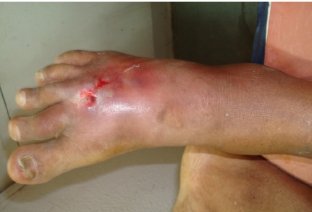

Distribution and analysis of diabetic foot
Introduction
Materials and methods
Results
Diabetic foot accounted for 6.95% of total surgeries done in our unit. Thirty eight patients were males and 7 were females. Thirty nine (86.66%) patients had type I diabetic foot complications whereas 5 (11.11%) had type 3 diabetic foot complications. 42.2% of patients had abscess and debridement (44.4%) was the most common procedure performed with majority done in type I diabetic foot complication and 8.8% of patients underwent major amputation and all of them had type 1 complications.
Conclusion
Introduction
Diabetic foot problems are a major health problem around the world and causes significant morbidity and mortality in patients with diabetes. Diabetic foot infections are the common cause of hospitalization in diabetics in our country. Infact, diabetic foot problems occurs in 2.5% of diabetic patients and accounts for 20% of all hospitalization in diabetics. Around 15% of all diabetic patients are at risk of development of foot ulcers during their lifetime.
Wagner’s and University of Texas are the two well established classifications for diabetic foot. Amit Jain’s classification is the latest new classification for a diabetic foot, which is the simplest, easy to understand and includes all the common complications of the diabetic foot.
The aim of this study is to analyse and distribute the diabetic foot lesions according to this new classification. This is the first such study conducted with this new classification (Table 1).
Materials and methods
This work conforms to the values laid down in the Declaration of Helsinki (1964). The protocol of this study has been approved by the relevant ethical committee related to our institution in which it was performed. All subjects gave full informed consent to participate in this study.
A retrospective study was conducted in surgical ‘3’ unit in the department of surgery of St John’s medical college, Bangalore, India, which is a tertiary care referral hospital. The study period was from January 2012 to December 2012. The following were the inclusion and exclusion criteria:
Inclusion criteria
Type 2 diabetes
Inpatients treated in this unit during this period
Exclusion criteria
Patients from other surgical units
Outpatient (as there was lack of data)
Inpatients with insufficient data for our study
Diabetic foot patients for split skin grafting
Diabetic lower limb lesions sparing the foot
Results
Discussion
A diabetic foot is known to produce a huge burden on the health care system worldwide. In developing countries like India, patients with foot complications spend around 32.3% of their income on the treatment.
Various studies have been done on diabetic foot using Wagner’s classification over last 3 decades. Wagner’s classification has been the most widely utilised system for lesions in a diabetic foot. The basic problem with Wagner’s classification is that it does not include all diabetic foot problems, does not describe vascular disease and there is wide distinction in the grades.
The new Amit Jain’s classification was proposed to include all the complications of a diabetic foot. It is the simplest of all the diabetic foot classifications, practical, easy to understand and can be used as a teaching tool.
This study aims to evaluate the usefulness of this classification for research studies for the first time.
Most of the studies worldwide show male predominance. In our study, males accounted for 84.44% and were affected more than females at a ratio of 5.4:1.
According to this study, type 1 diabetic foot complications are the most common complication (86.66%) and type 2 is the least common (2.22%). In fact, studies have shown that in India, most foot problems are infective and neuropathic in nature rather than vascular. In one such study, infection was as high as 90%, thereby resulting in amputations.
The rate of major amputation varies from 9–24% in literature. In our study, 8.89% of our patient underwent major amputation and all these patients belong to type 1 complications. There was no mortality in our study during this period. This may be due to the fact that less than 10% of our total operated cases were on a diabetic foot.
In this study, we found that we were able to appropriately distribute and study all the diabetic foot lesions according to this classification.
Conclusion
References
Chalya PL, Mabula JB, Dass RM, Kabangila R, Jaka H, McHembe MD et al. Surgical management of diabetic foot ulcers: A Tanzanian university teaching hospital experience. BMC Res Notes. 2011 Sep 24;4:365.
Viswanathan V, Thomas N, Tandon N, Asirvatham A, Rajasekar S, Ramachandran A et al. Profile of diabetic foot complications and its associated complications—a multicentric study from India. J Assoc Physicians India. 2005 Nov;53:933–6.
Altunbas H, Balci MK, Karayalcin U. A retrospective analysis of hospitalized diabetic foot patients in Akdeniz university school of Medicine, Division of Endocrinology. Turkish J Endo Met. 1999;3:123–27.
Adam MA, Hamza AA, Ibrahim AE. Diabetic septic foot in Omdurman Teaching hospital. Sudan IMJ. 2009;4(2):129–32.
Jain AKC. A new classification diabetic foot complications: A simple and effective teaching tool. J Diab Foot Comp. 2012;4(1):1–5.
Jain AKC, Joshi S. Diabetic foot classifications: review of literature. Med-Science Online First. 21 Mar, 2013.
Shah SF, Hameed S, Zahid MA. Evaluation and management of diabetic foot: a multicentric study conducted at Rawalpindi, Islamabad. Ann Pak Inst Med Sci. 2011;7(4):233–37.