
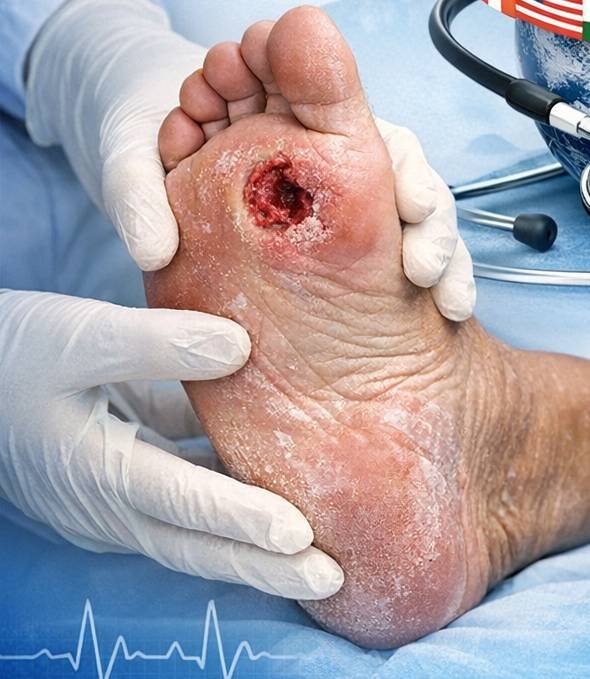
Amit Jain’s Project For Diabetic Foot Care- A National And Inter national Initiative To Improvize And Standardize Diabetic Foot Practice Around The World
ABSTRACT: Diabetic foot is a devastating complication of diabetes mellitus. It is unfortunately a ne
glected condition often leading to amputation which can render a person immobile or can affect his
day to day work. In spite of advances in field of medicine, there has not been much improvement in di
abetic foot care in India. Very few countries have implemented programs or project to improve diabetic
foot care. Each of them have some aims through this program. The Amit Jain’s project is one such
largest independent project on diabetic foot which is an Indian diabetic foot surgeon’s vision to impro
vise and standardize diabetic foot practice both in India and also around the world.
INTRODUCTION
Diabetic foot is a major health care problem that is
increasing around the world with increase in inci
dence of diabetes. Diabetic foot care is one of the
most ignored aspect of diabetes care in India [1].
The interest to manage diabetic foot problems is
suboptimal for many factors shared by patients
themselves, the community, the policy makers and
health care professionals [2]. Diabetic foot is
known to constitute 10% of diabetes related hospi
tal admission [3]. Low literacy, poverty, low socio
economic status, cultural habits like barefoot
walking and casual attitude are some of the pa
tients factors leading to complications [1, 3]. Poor
knowledge about this condition, lack of interest
and focus on other specialties, yet dealing with
diabetic foot problems are the health care profes
sional‟s factors leading to neglected diabetic foot
care.
Even today in the year 2016, the author as a clini cian and academician has seen the way diabetic foot is neglected in conferences and textbook and importance given to specialties like oncosurgery, GI surgery and laparoscopy among doctors as they offer a fruitful future and better financial out comes.
The biggest drawback in diabetic foot has been inappropriate training in this subject since the col lege days for undergraduate medical doctors and paramedics like nurses, especially in developing countries like South East Asian countries and Af rican countries. This often leads to blind practice in diabetic foot. In India, the family physician and nurses form the backbone of health care system. The Amit Jain‟s project aims to break this cycle and have standardize and improvised care for dia betic foot patients all around the world.
Even today in the year 2016, the author as a clini cian and academician has seen the way diabetic foot is neglected in conferences and textbook and importance given to specialties like oncosurgery, GI surgery and laparoscopy among doctors as they offer a fruitful future and better financial out comes.
The biggest drawback in diabetic foot has been inappropriate training in this subject since the col lege days for undergraduate medical doctors and paramedics like nurses, especially in developing countries like South East Asian countries and Af rican countries. This often leads to blind practice in diabetic foot. In India, the family physician and nurses form the backbone of health care system. The Amit Jain‟s project aims to break this cycle and have standardize and improvised care for dia betic foot patients all around the world.
INTERNATIONAL DIABETIC FOOT PRO JECTS
INTRODUCTION
There are very few projects in diabetic foot in dif
ferent parts of the world like the Brazilian save the
diabetic toot project [4], the Guyana project [5, 6],
the Step by step project[7, 8] etc . Each of these
project aimed at preventing amputation in diabetic Foot in their respective country/continent. In the
Guyana diabetes and foot care project, two phases
were employed to improve the foot and diabetes
care. In phase I, an inter-professional diabetic foot
care centre was established and phase 2 involved
regionalization to cover 90% of Guyanese popula
tion. In this project, 14 key opinion leaders were
educated and 340 health care professionals from
97 facilities were trained [5, 6]. The Guyana dia
betes and foot care project costs were funded by
the Canadian International Development Agency
[CIDA]. There were some barriers to knowledge
use in Guyana like lack of equipment and re
sources, absence of health care resources like po
diatrist/ chiropodist, etc [5].
The international diabetes federation [IDF], the international working group on the diabetic foot [IWGDF], together with the diabetic foot society of India and Muhimbili University college of Health Sciences, Tanzania has initiated a project called step by step, for improving diabetic foot care in developing world. The participating coun tries were India, Srilanka, Tanzania and Bangla desh [7]. The step by step foot project was initiat ed to train healthcare personnel in diabetic foot management, facilitate transfer of knowledge, ex pertise and improve patient education [8]. The project had a 3 day basic course with an interim period of 1 year of screening, followed by an ad vanced course and evaluation of activities. The aim of the basic course is to improve and offer new skills for the diagnosis of the foot at risk and treatment of the feet at risk and the uncomplicated foot ulcers. The objective of the advance course is to deal with the more complicated ulcer and to design referral pattern. Around 15 centers from across the country [Tanzania] had participated in 2004-2006 and 12 during 2004 -2007 [8]. This project showed in Tanzania, an improved foot ul cer management [8].This project was supported by the world diabetes foundation.
The international diabetes federation [IDF], the international working group on the diabetic foot [IWGDF], together with the diabetic foot society of India and Muhimbili University college of Health Sciences, Tanzania has initiated a project called step by step, for improving diabetic foot care in developing world. The participating coun tries were India, Srilanka, Tanzania and Bangla desh [7]. The step by step foot project was initiat ed to train healthcare personnel in diabetic foot management, facilitate transfer of knowledge, ex pertise and improve patient education [8]. The project had a 3 day basic course with an interim period of 1 year of screening, followed by an ad vanced course and evaluation of activities. The aim of the basic course is to improve and offer new skills for the diagnosis of the foot at risk and treatment of the feet at risk and the uncomplicated foot ulcers. The objective of the advance course is to deal with the more complicated ulcer and to design referral pattern. Around 15 centers from across the country [Tanzania] had participated in 2004-2006 and 12 during 2004 -2007 [8]. This project showed in Tanzania, an improved foot ul cer management [8].This project was supported by the world diabetes foundation.
THE AMIT JAIN’S PROJECT FOR DIA BETIC FOOT CARE – A NATIONAL AND INTERNATIONAL INITIATIVE
This project is a one man vision and mission to
improve the diabetic foot care across India and
around the globe. Being one of the pioneers in the
field of diabetic foot, the author from 2012 to
2016 had laid down various new concepts in dia
betic foot field ranging from staging, grading to
Scoring system in diabetic foot which ultimately
resulted in development of Amit Jain‟s Principle
and Practice of diabetic foot that aimed at impro
vising and standardize the diabetic foot practice
around the world. This is the world‟s first princi
ple and practice of diabetic foot till date in this
field [9].
The primary aim of this project is to
The primary aim of this project is to
1] To train more than 5000 nurses locally, nation
ally and internationally in next 10 years on the
basic and the new concepts in diabetic foot of the
author.
2] To train more than 1000 doctors in diabetic foot in India.
3] To provide diabetic footwear to the patients at a very subsidized cost under this project in India. There was basic reason of choosing these primary aims. Nurses in most of the countries are the im portant paramedics who form a backbone for health care of the patient in different countries. As of the current scenario in countries like India, the author who himself is involved in teaching institu tion actively, has noticed that the diabetic foot training is not imparted in most nursing colleges, which results in qualified nurses who have mini mum knowledge on diabetic foot. Once they be come registered nurse, there is hardly any inclina tion to learn on diabetic foot management. Simi larly, even in medical colleges, the teaching on diabetic foot to undergraduates is restricted. Only during internship they are exposed to the complex diabetic foot problems and their role remains re DOI:10.18535/ijmsci/v3i10.12 2299 2016 Cite As: Amit Jain’s Project For Diabetic Foot Care- A National And International Initiative To Improvize And Standardize Diabetic Foot Practice Around The World;Vol . 3|Issue 10|Pg:2298 2301 stricted to cleaning and dressing of wounds with out understanding this condition. When they be come physicians, the care on diabetic foot does not progress beyond what they learnt in under graduate days. Even in the conference aimed at family physicians update, diabetic foot forms the least discussed topic by the organizers and at tendees. The general practitioners is the first doc tor in contact in Indian health care system in most of the areas and the author believes that it is es sential in improvising their knowledge on this condition and imparting confidence in dealing with this condition. The third primary aim of this project was to provide foot wears at a very subsi dized cost in his local region. There is a basic hab it of barefoot walking in the people of this region which is still quite prevalent. The footwear can play an important role in avoiding injuries from stones, nails, etc thereby preventing deadly com plication leading to amputations. Training doctors, nurses and other specialist shall have both direct and indirect effects. The direct effect would be improvement in the knowledge of the professionals on diabetic foot which is lacking in current curriculum. It shall directly lead to im provement in diabetic foot care of the patient ranging from early identification of the complica tion and initiating appropriate treatment. The indi rect effect would be an improvement in overall healthcare and amputation prevention that will affect the patient‟s health, job, family and the na tion due to loss of productivity. This project is thus aimed at national level training and also at international level. This aim is obviously going to be achieved by conducting separate workshops, training pro grams, CME‟s, conferences, educational materials like books and journals on the Amit Jain‟s princi ple and practice of diabetic foot as a main theme, sharing various new concepts that revolutionized the diabetic foot practice around the world. The author had conducted one such workshop in 2015 for more than 100 nurses in south India and post workshop the feedback was positive and there was a huge impact on the attendees in understanding this condition. Thus it became imperative for the author to take it in form of a project and take it at national and international level.
2] To train more than 1000 doctors in diabetic foot in India.
3] To provide diabetic footwear to the patients at a very subsidized cost under this project in India. There was basic reason of choosing these primary aims. Nurses in most of the countries are the im portant paramedics who form a backbone for health care of the patient in different countries. As of the current scenario in countries like India, the author who himself is involved in teaching institu tion actively, has noticed that the diabetic foot training is not imparted in most nursing colleges, which results in qualified nurses who have mini mum knowledge on diabetic foot. Once they be come registered nurse, there is hardly any inclina tion to learn on diabetic foot management. Simi larly, even in medical colleges, the teaching on diabetic foot to undergraduates is restricted. Only during internship they are exposed to the complex diabetic foot problems and their role remains re DOI:10.18535/ijmsci/v3i10.12 2299 2016 Cite As: Amit Jain’s Project For Diabetic Foot Care- A National And International Initiative To Improvize And Standardize Diabetic Foot Practice Around The World;Vol . 3|Issue 10|Pg:2298 2301 stricted to cleaning and dressing of wounds with out understanding this condition. When they be come physicians, the care on diabetic foot does not progress beyond what they learnt in under graduate days. Even in the conference aimed at family physicians update, diabetic foot forms the least discussed topic by the organizers and at tendees. The general practitioners is the first doc tor in contact in Indian health care system in most of the areas and the author believes that it is es sential in improvising their knowledge on this condition and imparting confidence in dealing with this condition. The third primary aim of this project was to provide foot wears at a very subsi dized cost in his local region. There is a basic hab it of barefoot walking in the people of this region which is still quite prevalent. The footwear can play an important role in avoiding injuries from stones, nails, etc thereby preventing deadly com plication leading to amputations. Training doctors, nurses and other specialist shall have both direct and indirect effects. The direct effect would be improvement in the knowledge of the professionals on diabetic foot which is lacking in current curriculum. It shall directly lead to im provement in diabetic foot care of the patient ranging from early identification of the complica tion and initiating appropriate treatment. The indi rect effect would be an improvement in overall healthcare and amputation prevention that will affect the patient‟s health, job, family and the na tion due to loss of productivity. This project is thus aimed at national level training and also at international level. This aim is obviously going to be achieved by conducting separate workshops, training pro grams, CME‟s, conferences, educational materials like books and journals on the Amit Jain‟s princi ple and practice of diabetic foot as a main theme, sharing various new concepts that revolutionized the diabetic foot practice around the world. The author had conducted one such workshop in 2015 for more than 100 nurses in south India and post workshop the feedback was positive and there was a huge impact on the attendees in understanding this condition. Thus it became imperative for the author to take it in form of a project and take it at national and international level.
The Futuristic approach of this project is
1] To provide one/two year certified training pro gram [clinical] in diabetic foot care for nurses/ doctors
2] To conduct “AMIT JAIN’S INTERNA TIONAL TRAVELLING FELLOWHIP PROGRAM IN DIABETIC FOOT CARE” for doctors and nurses from different part of the de veloping and underdeveloped countries. The train ing program shall range from 1month to 6 months based upon the participant‟s pre existing knowledge and qualification. It can be at any of the approved centre‟s/ organization or through modules and clinical training, where the centre or organization is willing to collaborate with Amit Jain‟s project and its vision. This type of fellow ship training should probably form a standardize certification needed to show adequate training in new concept in diabetic foot.
3] To start „AMIT JAINS BEST RESEARCH PAPER/ AWARD’S” and form it to be a prestig ious certification in field of diabetic foot so that the work of people in this field can be recognized and appreciated, which is currently lacking in var ious countries. Currently, Brindavvan Areion hospital of Banga lore, India is the first organization that came for ward to support this project [Figure 1] till 2020, the author is sure that many more like minded or ganization and philanthropist would come forward with time to support this novel cause.
1] To provide one/two year certified training pro gram [clinical] in diabetic foot care for nurses/ doctors
2] To conduct “AMIT JAIN’S INTERNA TIONAL TRAVELLING FELLOWHIP PROGRAM IN DIABETIC FOOT CARE” for doctors and nurses from different part of the de veloping and underdeveloped countries. The train ing program shall range from 1month to 6 months based upon the participant‟s pre existing knowledge and qualification. It can be at any of the approved centre‟s/ organization or through modules and clinical training, where the centre or organization is willing to collaborate with Amit Jain‟s project and its vision. This type of fellow ship training should probably form a standardize certification needed to show adequate training in new concept in diabetic foot.
3] To start „AMIT JAINS BEST RESEARCH PAPER/ AWARD’S” and form it to be a prestig ious certification in field of diabetic foot so that the work of people in this field can be recognized and appreciated, which is currently lacking in var ious countries. Currently, Brindavvan Areion hospital of Banga lore, India is the first organization that came for ward to support this project [Figure 1] till 2020, the author is sure that many more like minded or ganization and philanthropist would come forward with time to support this novel cause.
CONCLUSION
Diabetic foot is a neglected entity both by patients
and healthcare professionals and organization in
country like India. Amit Jain‟s project for diabetic foot care is first such initiative to improve the dia
betic foot at all possible level. Although a vision
and mission of one man who currently is without
any major support, its only time that will show the
success and support of this project from various
organization, a vision till 2025.

REFERENCES
1] Shankhdhar K, Shankdhar LK, Shankdhar U,
Shankdhar S. Diabetic foot problems in India: An
overview and potential simple approaches in a de
veloping country. Curr Diab Resp 2008;8(6):452
7.
2] Wahbi AM. The diabetic foot in the Arab world. Saudi Med J 2006;27(2):147-153.
3] Viswanathan V, Madhavan S, Rajashekar S, Chamukuttan S, Ambady R. Amputation preven tion initiative in South India: Positive impact of foot care education. Diabetes 2005;28(5):1019-21. Care
4] Pedrosa H, Boulton A, Dias MSO. The diabetic foot in Brazil. In: The foot in Diabetes. 4th edition, Wiley-India, 2006;364-374.
5] Lowe J, Sibbald Rg, Taha NY et al. The Guy ana Diabetes and foot care project: Improved Dia betic foot evaluation reduces complication rate by two thirds in a lower middle income country. Int J Endocrinol 2015:920124.
6] Lowe J, Sibbald RG, Taha NY et al. The Guy ana Diabetes and foot care project: A complex quality improvement intervention to decrease dia betes related major lower extremity amputations and improve diabetes care in a lower middle in come country. Plos Med 2015;12(4):e1001814.
7] Bakker K, Abbas ZG, Pendsey S. Step by Step, improving diabetic foot care in developing world. Pract Diab Int 2006;23(8):1-6.
8] Abbas ZG, Lutale JK, Bakker K, Baker N, Archibald LK. The “step by step” diabetic foot project in Tanzania: a model for improving patient outcome in less developed countries IWJ 2011;8(2):169-175.
9] Jain AKC, Viswanath S. Studying major ampu tations in a developing country using Amit Jain‟s typing and scoring system for diabetic foot com plications – time for standardization of diabetic foot practice. Int Surg J 2015;2(1):26-30.
2] Wahbi AM. The diabetic foot in the Arab world. Saudi Med J 2006;27(2):147-153.
3] Viswanathan V, Madhavan S, Rajashekar S, Chamukuttan S, Ambady R. Amputation preven tion initiative in South India: Positive impact of foot care education. Diabetes 2005;28(5):1019-21. Care
4] Pedrosa H, Boulton A, Dias MSO. The diabetic foot in Brazil. In: The foot in Diabetes. 4th edition, Wiley-India, 2006;364-374.
5] Lowe J, Sibbald Rg, Taha NY et al. The Guy ana Diabetes and foot care project: Improved Dia betic foot evaluation reduces complication rate by two thirds in a lower middle income country. Int J Endocrinol 2015:920124.
6] Lowe J, Sibbald RG, Taha NY et al. The Guy ana Diabetes and foot care project: A complex quality improvement intervention to decrease dia betes related major lower extremity amputations and improve diabetes care in a lower middle in come country. Plos Med 2015;12(4):e1001814.
7] Bakker K, Abbas ZG, Pendsey S. Step by Step, improving diabetic foot care in developing world. Pract Diab Int 2006;23(8):1-6.
8] Abbas ZG, Lutale JK, Bakker K, Baker N, Archibald LK. The “step by step” diabetic foot project in Tanzania: a model for improving patient outcome in less developed countries IWJ 2011;8(2):169-175.
9] Jain AKC, Viswanath S. Studying major ampu tations in a developing country using Amit Jain‟s typing and scoring system for diabetic foot com plications – time for standardization of diabetic foot practice. Int Surg J 2015;2(1):26-30.