
Amit Kumar C Jain
Department of surgery, St. John’s Medical College and Hospital, John Nagar, Sarjapur Road,
Bangalore, India
Abstract
The incidence of diabetic foot problems is increasing all around the world with increase
incidence of diabetes. Various classifications and scoring system exist for diabetic foot
problems. Each has its own merits and demerits, but the basic aim of them is to improvise the
practice of diabetic foot. Majority of these classifications and scorings are based on either on
diabetic foot ulcer and healing or on neuropathy. The author proposes a new scoring system
for diabetic foot complication with the aim of improvising and standardizing the practice of
diabetic foot management. This new scoring system for the first time includes the entire
spectrum of all the common complications of the diabetic foot disorders which was lacking in
almost all the scoring system till date. Importantly, this scoring system takes into account
clinical, radiological and surgical factors. The new scoring system shall help in predicting
the risk of major amputations in patient with diabetic foot complications.
Keywords: Diabetic foot, Amit Jain’s, new scoring, amputations
(Rec.Date: Jul 16, 2013
Accept Date: Aug 26, 2013)
Corresponding Author: Department of surgery, St. John’s Medical College and Hospital,
John Nagar, Sarjapur Road, Bangalore, India
E-mail:
dramitkumarcj@yahoo.in
Introduction
The global prevalence of diabetes mellitus was estimated to be around 2.8% in 2000 and it
was predicted to increase to 4.4% by 2030, which means that there will be more than 366
million people with diabetes by that year [1]. In India, which was once regarded as the
diabetic capital of the world, it was estimated that in 2000, there were around 32 million
people with diabetes which was predicted to increase to nearly 80 million by 2030 [1],
whereas in England there are 3.1 million people with diabetes and it is likely to rise to 4.6
million by 2030 [2].
In many developing and underdeveloped countries, diabetic foot disease is a neglected entity
both by the physicians and the patients. In fact, a few years ago, in most of the developing
countries including India, podiatry/ diabetic foot surgery as a speciality or profession was non
existent [3,4]. Since last few years there has been a growing interest in this speciality.
Most of the data and concepts on diabetic foot are taken from western countries like U.S.A
where this speciality is well recognized, standardize and valued.
The author being one of the few handful of qualified and specialist podiatric surgeon in India,
has proposed various newer concepts in diabetic foot like a newer classification of diabetic
foot complications [5] and a new grading system [6] for surgical debridement in diabetic
lower limb, in order to improvise and standardize the diabetic lower limb salvage.
In this unique article, the author proposes a new scoring system for diabetic foot
complications, in order to improvise the diabetic foot practice.
Need for the New Scoring System
There are many scoring system in diabetic foot. Each has its own merit and demerits, but most
of them aimed at improving diabetic foot care and to have a common language. Some of the
scoring systems are DEPA scoring system [7] for healing diabetic foot ulcers, DUSS (diabetic
ulcer severity score) for diabetic foot ulcers [8], Saint Elian wound score system [9], Toronto
clinical scoring system [10] for diabetic polyneuropathy, etc. These scoring systems basically
concentrates on either healing of diabetic foot ulcers or on neuropathy.
There is yet no scoring system that addresses all the diabetic foot complications. This new
scoring system (Table 1 and 2) for the first time includes the clinical, radiological and surgical
Table 1. Showing the new Amit Jain’s scoring of diabetic foot
| Sl no | Characteristics | Involvement of foot | |||
|---|---|---|---|---|---|
| 1 | Presence of ulcer | No ulcer → 0 | Forefoot ulcer → 2 | Midfoot ulcer → 4 | Hindfoot ulcer / full foot → 6 |
| 2 | Osteomyelitis [O.M] | No O.M → 0 | Forefoot O.M → 2 | Midfoot O.M → 4 | Hindfoot O.M → 6 |
| 3 | Presence of pus | No pus → 0 | Forefoot pus/dorsum → 2 | Midfoot pus → 4 | Hindfoot pus/beyond it → 6 |
| 4 | Gangrene [dry/wet] | No gangrene → 0 | Forefoot gangrene → 2 | Midfoot gangrene → 4 | Hindfoot gangrene/beyond → 8 |
| 5 | Peripheral arterial disease | No P.A.D → 0 | Mild → 2 | Moderate → 4 | Severe → 8 |
| 6 | Charcot foot | No → 0 | Forefoot → 2 | Midfoot → 4 | Hindfoot / whole foot → 8 |
| 7 | Necrosis [skin] | No → 0 | Forefoot necrosis → 2 | Midfoot necrosis → 4 | Hindfoot necrosis/beyond → 8 |
| 8 | Associated cellulitis | No → 0 | Upto forefoot → 2 | Upto midfoot → 4 | Upto hindfoot & beyond → 6 |
| 9 | Previous amputation | No → 0 | Toe amputation → 2 | Forefoot amputation → 4 | Midfoot amputation → 6 |
| 10 | Presence of gas (radiologically) | No → 0 | Gas in forefoot → 1 | Gas in/upto midfoot → 2 | Gas in/upto hindfoot → 3 |
| 11 | Myonecrosis | No → 0 | Single muscle group → 2 | More than one muscle group → 4 | Entire foot / extension to leg → 8 |
| 12 | Joint involvement | No → 0 | Forefoot joint exposure → 2 | Midfoot joint exposure → 4 | Hindfoot joint exposure → 6 |
| 13 | Septic shock | No → 0 | Present → 2 | ||
| 14 | Renal failure | No → 0 | Present → 2 | ||
| 15 | Smoking [heavy smoker] | No → 0 | Present → 2 | ||
| 16 | Surgeon factor | Qualified podiatric / diabetic foot specialist → 0 | Other surgeons → 2 | ||
Table 2. Showing the major amputation risk assessment using Amit Jain’s scoring system.
| Sl no | Scoring | Major amputation risk | Percentage |
|---|---|---|---|
| 1] | < 5 | No amputation | )0% |
| 2] | 6 – 10 | Low risk | <25% |
| 3] | 11 – 15 | Moderate risk | 25%-49% |
| 4] | 16 – 20 | High risk | 50% – 74% |
| 5] | 21-25 | Very high risk | 75% – 99% |
| 6] | >26 | Amputation inevitable | 100% |
Table 3. Showing the advantages of the Amit Jain’s scoring system
| Sl no | Advantages |
|---|---|
| 1] | It is simple |
| 2] | Easy to understand |
| 3] | Practical in clinical practice |
| 4] | It includes clincal, radiological and surgical findings in the diabetic foot which is unique and first of its kind in diabetic foot scoring system |
| 5] | It includes most of the complications of diabetic foot disorder |
| 6] | Useful as a teaching tool |
| 7] | It can be used for research purpose |
| 8] | It can be used as a chart or a case sheet to maintain the records |
| 9] | It can help in predicting the outcomes in diabetic foot |
| 10] | It can also be helpful in medicolegal cases |
| 11] | This scoring system can also be applied in non diabetics |
Further, we can have triangle of surgical offloading in pattern similar to triangle of amputation and triangle of
offloading (non –surgical) wherein the 3 available options can be placed at the 3 corners of the triangle [10, 11].
This can also serve as a good teaching tool (Figure 1).
Understanding the Scoring System
Figure 1-19 are some examples of diabetic foot complications with possible scoring that helps
one to understand how to score. The scoring system has both an initial scoring and later
modification of the score after the surgery to arrive at a final scoring for predicting the risk of
major amputation. A retrospective analysis of it also can be done if appropriate records are
maintained.
It is essential that the treating surgeon should be treating most of the common cases of
diabetic foot complications when analyzing the scoring system so that there is uniformity and
no bais exist thereby confusing the scoring system. Patients with lesions predominantly in leg
or thigh, sparing the foot, are not included in this scoring system.
This scoring system for the first time gives weightage to the surgeon and his speciality.
Podiatric/Diabetic foot surgeons [surgeons with authentic training or work on diabetic foot or
qualifications like DPM/Postdoctoral fellowships/diplomas or equivalent in field of Podiatric
surgery] are scored 0 whereas all other surgeons are given a score of 2. Studies have shown
that diabetic foot complications treated by the specialist podiatric surgeons/diabetic foot
surgeons have an excellent outcome [11]. Infact, if one looks at the figures with examples,
certain diabetic foot conditions if treated by the specialist surgeon can actually downstage the
scoring system and reduces the risk of major amputation. This is quite important in today’s
scenario where huge number of doctors are being produce with substandard training [12, 13]
and non authentic experience gained from poor/substandard medical colleges [14].
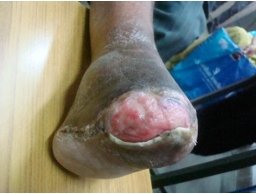
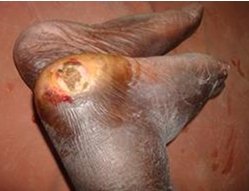
Figure 1. Showing a patient with ulcer over
transmetatarsal stump. The scoring for this patient
would be forefoot ulcer 2 + previous transmetatarsal
amputation 4 + surgeon factor 2 = 8 which places him
under low risk for major amputation.
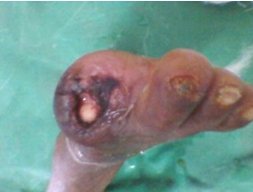
Figure 3. Showing a patient with non healing
ischemic ulcer [abi – 0.56]. His scoring would be mod
P.A.D 4 + forefoot ulcer 2 + surgeon factor 2 +
previous great toe amputation 2 = 10 which is low risk
for major amputation.
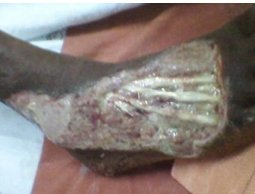
Figure 4. The scoring would be – ulcer 6 + pus 3 +
surgeon factor 2 = 11 moderate risk. If podiatric
surgeon deals with it, then the score is 9, which means
it becomes low risk for major amputation.
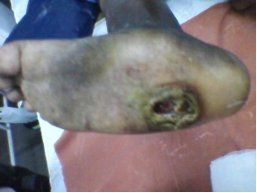
Figure 5. Showing a case of charcot foot with ulcer.
Surgeon factor 2 + ulcer hindfoot 6 + charcot 6 = 14
moderate risk.
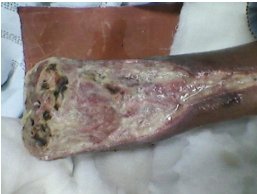
Figure 6. Showing a case s/p debridement and
amputation. Note the wound is still infected. Surgeon
factor 2 + forefoot amputation 4 + ulcer 6 = 12,
rendering patient to moderate risk for amputation.
Presence of pus makes it high risk that is 12 + 6= 18.
Presence of O.M = 18 + 4 midfoot = 22. In such cases
major amputation is almost for sure. If podiatric
surgeon treats it, then also score is 20. It is high risk
for major amputation, but salvage still possible with
his expertise.
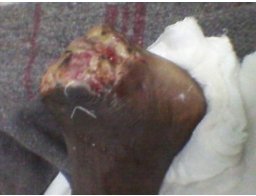
Figure 7. The scoring would be surgeon factor 2 +
midfoot amputation 6 + ulcer 4 = 12, moderate risk
amputation. If there is moderate P.A.D, then 4 = 16
which is high risk for amputation. If podiatric surgeon
treats it then score is 14, that is foot becomes at
moderate risk for amputation.
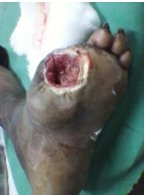
Figure 8. The scoring would be surgeon factor 2 +
forefoot ulcer 2 + involvement of forefoot and midfoot
charcot 4 = 8 , rendering it for low risk for major
amputation. Presence of pus upto midfoot 4 = 12
renders to moderate risk amputation. Presence of even
forefoot O.M 2 = 14 still renders him to moderate risk
for major amputation. How ever presence of O.M in
midfoot 4 = 16, renders it to high risk for major
amputation.
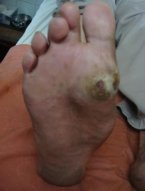
Figure 9. Showing a patient with charcot foot and
ulcer. His score would be midfoot charcot 4 + surgeon
factor 2 + forefoot ulcer 2 = 8 which is low risk for
major amputation. If there is presence of pus and
underlying osteomyelitis the score would be 12 which
would place him under moderate risk. If this case is
managed by expert podiatric surgeon then it is down
scored to 10, which means it would become low risk
for major amputation.
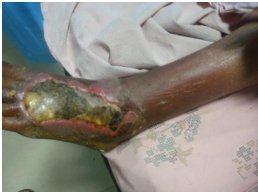
Figure 10 Showing a patient with necrotising
infection over the left foot. His score would be
necrotic patch 4 + surgeon factor 2 + cellulitis 6 = 12
which is moderate risk. If treated by podiatric surgeon
then it is downscored to 10 which renders it to low
risk for major amputation. Presence of pus would
render it to moderate risk for amputation even if
treated by podiatric surgeon as score would become
12 [14 if other surgeons treats].
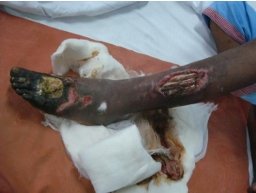
Figure 11. Showing a patient with forefoot gangrene
and ulcer over midleg with pus. He had this for last 3
months. His score would be pus 6 + surgeon factor 2 +
forefoot gangrene 2 + ulcer over leg 6 = 16 which is
high risk for major amputation. If treated by podiatric
surgeon, it is downscored to 14 which renders it to
moderate risk for major amputation.
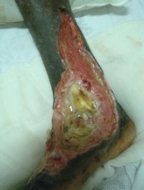
Figure 12. Scoring is surgeon factor 2 + ulcer 6 +
expose ankle joint 4 + pus 6= 18 high risk for major
amputation. If O.M then 6 = 24. Almost requires
amputation as it is very high risk case.
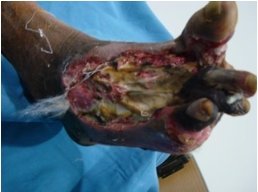
Figure 13. The scoring is surgeon factor 2 +
gangrene 2 + ulcer 6 + cellulitis 6 = 16 high risk for
major amputation. If treated by podiatric surgeon, then
score would be 14, down scoring it to moderate risk
for major amputation.
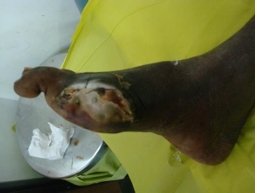
Figure 14. The scoring is surgeon factor 2 +
amputation 2 + P.A.D 8 + ulcer 2 + smoking 2 = 16,
rendering it to high risk for major amputation. Patient
with this scoring has high risk for major amputation
[50 – 75% amputation risk]. One should understand
that this scoring is meant for all types of diabetic foot
lesions and not isolated problems like this one. This is
actually is not a diabetic foot. Patient is a chronic
smoker with prolong history of claudication, having
ileofemoral lesion. He was a known diabetic.
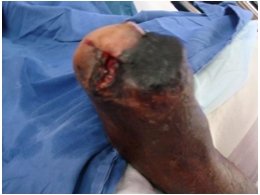
Figure 15. The scoring is surgeon factor 2 + midfoot
amputation 6 + moderate P.A.D 4 + gangrene 4 +
ulcer 4 + smoking 2 = 22. This foot is at very high risk
for major amputation.
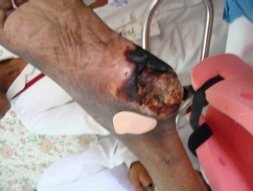
Figure 16. The scoring is surgeon factor 2 + smoking
2 + P.A.D 8 + Osteomyelitis 8 + ulcer 6 + gangrene 8
= 34, major amputation inevitable [100%].
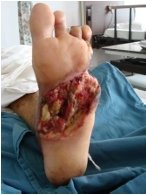
Figure 17. The scoring is surgeon factor 2 + ulcer 4 +
toe amputation 2 = 8. The foot is at low risk for major
amputation.
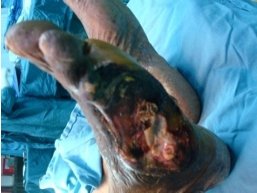
Figure 18. The score is surgeon factor 2 + toe
amputation 2 + P.A.D 8 + pus 4 + gangrene 2 + ulcer
4 + smoking 2 + forefoot joint exposure= 26. In this
case major amputation is inevitable. Patient underwent
major amputation.
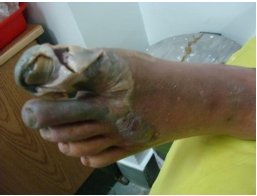
Figure 19. The scoring for it is surgeon factor 2 +
gangrene 2 + necrotizing infection 2 + cellulitis 2 = 8.
Low risk for major amputation. This lesion looks very
scary but has low major amputation rate.
Conclusion
Diabetic foot is a neglected entity both by physicians and the patients even today. Last decade
has seen evolvement of the various newer concepts and techniques in the management of the
diabetic foot. This new scoring system is one such new concept that will undoubtly help in
improvisation of diabetic foot practice. The validity of this new scoring system would be
determined by future studies/trials. Being the first scoring system that includes all the
common complications of diabetic foot, this scoring system definitely would have its
important place in practice of diabetic foot, especially in underdeveloped and developing
countries like the Indian subcontinent, where podiatric surgery is still not an established
speciality even today and most of the concepts are taken from the west where it is an well
established speciality.
Medicine Science 2014;3(1):1068-78
Medicine Science 2014;3(1):1068-78
New Scoring System for
Major Amputations in Diabetic Foot
doi: 10.5455/medscience.2013.02.8110
References
- Bowker JH, Pfeifer MA. In: Levin and O’ Neal’s The Diabetic Foot, 7th ed, Philadelphia, PA, USA: Mosby, 2008.
- McInnes AD. Diabetic foot disease in the United Kingdom: about time to put the feet first. J Foot Ankle Research. 2012;5(1):26.
- Braid S, Stuart L. India: Diabetic foot care in the developing world. Wounds international. 2009;1-2.
- Shankhdhar K. A world of difference in diabetic foot care. Podiatry Today. 2008;21(11):106.
- Jain AKC. A new classification of diabetic foot complications: A simple and effective teaching tool. J Diab Foot Comp. 2012;4(1):1-5.
- Jain AKC. A new classification (grading system) of debridement in diabetic lower limbs-An improvisation and standardization in practice of diabetic lower limb salvage around the world. (Article in press, doi:10.5455/medscience.2013.02.8093).
- Younes NA, Albsoul AM. The DEPA scoring system and its correlation with the healing rate of diabetic foot ulcers. JFAS. 2004;43(4):209-13.
- Beckert S, Witte M, Wicke C, Konigsrainer A, Coerper S. A new wound based severity score for diabetic foot ulcers. Diab Care. 2006;29(5):988-92.
- Jesus FRM. A checklist system to score healing progress of diabetic foot ulcers. IJL. 2010;9(2):74-83.
- Bril V, Perkins BA. Validation of the Toronto clinical scoring system for diabetic polyneuropathy. Diabetes Care. 2002;25(11):2048-52.
- Jain AKC, Varma Ak, Mangalanandan, Kumar H, Bal A. Surgical outcome of necrotizing fasciitis in diabetic lower limbs. J Diab Foot Comp. 2009;4(1):80-4.
- Kumar S. India cracks down on admissions to substandard medical schools. The Lancet. 2001;358(9276):134.
- Yathish TR, Manjula CG. How to Strengthen and Reform Indian Medical Education System: Is Neutralization the Only Answer? Online J Health Allied Scs. 2009;8(4):1.
- Ramachandra DS, Srinivas DNG. Crass Commercialization and Corruption of the Indian medical system and the resultant decay of the Indian Health Education in the last two decades. A case for urgent international review and monitoring. Electronic
Physician. 2009;1:9-16.